Thursday, May 12, 2016

Self reflection

The 2015-2016 year is coming to an end and a new chapter is opening. With this I have come to realize that being in the Ready, Set, Teach program has helped me grow as not only a student but as a person. I had the privilege of having three amazing mentors over the course of these two years in this program. I have Mrs. Barron-Wirth the mentor of the program, Mrs. Nix who is my current mentor  this year, and Mrs. Middaugh my mentor last year. I would like to thank them for letting me into their classrooms to learn and grow with them. 
I am currently an intern in a bilingual prekindergarten class. My fantastic mentor Mrs. Nix has a very creative and intriguing way of teaching her students. After months of watching her methods of teaching I have noticed that some of her habits have rubbed off on me. Like how much patience she has. I use to have such a low patience tolerance and now? Well now I have noticed that I have gained a lot more patience. Also I love how much courage she has. That has rubbed off on me as well, I have noticed that I am not as worried as before when I was afraid of speaking up. Being surrounded by these bright and wonderful kids has given me such wonderful memories and happy days. I have gained so much happiness and confidence thanks to these kids and Mrs. Nix for letting me express myself in her classroom. These kids don't care how you look all they know is that you are there for them no matter what. I have formed such a strong bond with these students and I am truly sad to see how fast this year went by. I truly care for these kids they have become a big part of my life. I am so glad that I was able to work alongside such a wonderful mentor and with such amazing children. These kids did teach me one important lesson and that is that life is precious and goes by quickly so enjoy it while it last. Smile while you still have teeth left is what these crazy kids would say. This year may be ending but I know that this year will always be an important chapter in my life. I am g,ad that I was able to get such wonderful mentors and children who have helped me in my life and academics. 
I also want to thank Mrs. Barron-Wirth for all she has done. You have given us a home away from home with all the encouragement. We have become one big family who want to see eachother succeed. I will never be able to thank her for all she has done for me specifically. I want to go into the teaching profession and inspire children as much as she has inspired me. She has pushed me-even when I thought I couldn't do it-because she knows that I can achieve so much if I would just have the confidence in myself to do so. Mrs. Barron thank you for being a teacher, a friend, and an idol to me. I can only hope to impact students half as much as you have done for me. This year has been a year full of ups and downs even when it had its downs you have motivated us to see the other side. You always show us movies of teachers who made a difference well I hope that when your movie comes out I will be able to be in it. 
Thank you to everyone who has made this year an unforgettable one full of happiness. Thank you to my awesome mentor teachers.

Wednesday, April 13, 2016

My Favorite Children's Book

My favorite children's book is Corduroy by Don Freeman. This book is about a bear named Corduroy who lives in a department store. Oh how Corduroy wishes to have a home, bed, and friend. One day it seems like these dreams may come true. A young girl comes in and asks her mother if she can get this bear whom she is fond of. The mother replies that he is not new because he was missing a button and that she had spent a lot of money already. Corduroy was suprised to find that he indeed was missing a button. He then thinks to himself " I must go find my button tonight." He goes on a little adventure through the stores looking for it. Going up a mountain (escalators) he makes his way into the "palace" where he believes to have found his button. Unfortunately it turns out not to be his button. After making a loud noise he gets caught by a security officer and is taken back where he belongs. The next morning the young girl goes back to buy him despite him not having a button. Once they go home she sews on a button for him although she "loves him the way he is" (not brand new). She says it will make him feel much more comfortable. Corduroy's wishes finally came true when he realizes he not only got a home but he has a home inside his new friends heart.

I would give this book a 5/5 stars
I love this book because of the most important lesson that it teaches children. It teaches them that friendship has no limits. This young girl is fond of this little bear despite him not looking brand new. She goes and gathers all her money and returns the next day to get her friend. This little bear goes on a little adventure to find his missing button so he can look new and finally get a friend. I also really like how it teaches children not to judge based on appearances. Although this little girl sews on a button for Corduroy in the end it's only for him to be more comfortable. As a child I loved this book and even now I enjoy reading this book. I really like how it promotes children to be imaginative by the way this little bear sees simple things like escalators as giant mountains. As we are getting older we come to realize that being imaginative isn't being promoted as much anymore. Thankfully this book makes sure to teach our children everything that we at times forget to do.

Thursday, March 10, 2016

special needs in the classroom

When you look up special needs you get the following definition. Special needs: (Noun) particular educational requirements resulting from learning difficulties, physical disabilities, or emotional and behavioral difficulties. There are so many different types of special needs children may have that teachers must keep in mind when making lesson plans. It's especially hard to create a lesson that is not to challenging for the children who struggle to learn but at the same time challenging those who understand the material well enough. I believe children with special needs should not be made to feel like they are any different. That is why I believe inclusion is so important, it's like you are giving these kids a sense of belonging. That is an important factor for younger children's development especially. In my future classroom I would make sure all my students knew that they are all special and were put on this world for a reason. Next I would make sure that I understood more in depth what special needs any of my students have. Then I would talk to someone who specializes in this sort of  area and ask for any advice they may have. Then I would talk to the parents and with the specialist and hopefully together we can come up with a plan. After that I would make sure to put my students in pairs by how they are understanding the material. And after that is complete I would put a pair of students who struggle with a pair of students who comprehend the material together and that would be a group or table. You see this way the students who understand can now teach the other students how to do the material. I believe students learn best through eachother and can also help boost their confidence. This is because children are no longer afraid of asking questions since their friends are the ones "teaching" them. This also gives the teacher more time to work individually with the students who have special needs. This also gives those students who understand the lesson something to keep them entertained. I do believe that speacial needs and gifted and talented students all in the same environment may be hard. Just because it's hard doesn't mean that you should give up it just means you must find a way to bring balance into the classroom. You should never stop trying to get your children engaged and wanting to learn. The minute students sense this they will believe you are giving up and that is very dangerous especially for tougher children's development. This is why I would make sure to always motivate all my students and make sure their parents are involved in their education. I believe that special needs students just need extra help and the gifted and talented students just need challenging work that will catch their attention.

Wednesday, March 2, 2016

What is creativity?

I recently watched a TED talk from Sir Ken Robinson "How to Change Education" I will expressing my ideas over this video in my blog this week.
  When you search up the definition of creativity you get the following: Creativity (noun)- The use of the imagination or original ideas, especially in the production of artistic work. Creativity to me is the freedom to express oneself in whatever way they can. Creativity is extremely important in education, sadly it is not encouraged instead it is suppressed. In his video Mr. Robinson says " children have a vast appetite for learning and it only dissipates when we educate them." This got me thinking of why that statement is so true. You see in today's world we teach our children to get them ready for a test. Our educational system revolves around exams and squanders any trace of creativity a students might have. We teach them to think like everyone else in black and white. This is why we have so few people who appreciate art or any form of creativity. Mr. Robinson also says " To teach you don't need to know everything...you do need to be able to excite people about the material and fuel creativity." Kids are so desensitized to creativity and passion that when we try to get them to use any form of creativity or passion they fail or end up trying to copy the example the teacher made. We have for as long as I can remember taught kids to become sponges just soak up information. Often people ask themselves "why are we Americans ranked so low on our high school graduates." Well we take away any chance of kids wanting to continue their education. I have so many teachers who try to let us be as creative as we can. Yet at the same time the same amount of teachers are also killing any chance of having creativity in the classroom. I have a teacher who lets us be as creative as we want. She lets us use Pinterest and has us do fun activities every once in a while. I use to hate school, I mean I was on the verge of dropping out of school. Then I started seeing this teacher do all these unusual things to get kids involved in learning. That class encouraged creativity and let us use it to our best abilities. I suddenly found confidence and a passion for education, so much that I decided I wanted other kids to feel the same way. I decided that I was going to be a teacher and change how we view teaching. I want to encourage students creativity every possible way. I have kids come up and show me these beautiful drawings and I tell them how beautiful they are. Then I ask them what they drew about and they tell me it's a part of the story or a funny story that happened yesterday. You can just see the passion and creativity being incorporated slowly but surely. Soon they will get older and there won't be as many drawings on the walls because they are busy studying for a test. Soon there won't be any more time for making their project creative because they have eight other classes who also asked for projects. We need to start encouraging kids to be creative. We need to take a break from all these assessments and just focus on letting kids learn from one another. Mr. Robinson brings up the topic of flipped classrooms. Ever since I heard of this idea I have become obsessed with somehow getting it incorporated into our school. I strongly agree with Mr. Robinson about building our education system from the ground up. Think of our education system like a house. You don't build the houses roof first right? No you start off from the ground and work your way up. The same applies to education we must start off from the basics. This means getting creativity incorporated into all grade levels and keep encouraging them. I believe that by having flipped classrooms for older students we can begin to slowly but surely see a change in education. Students have time at school to learn from one another and encourage eachother. I also love how Mr. Robinson says that education is personal. What this means is that every child is different. Yet we treat all students the same and expect the same outcome from them. Our system is extremely broken and we need to find a solution fast. We need to get teachers who encourage students to be free. We need to stop undermining education when it is the most important profession their is. We need to get kids passionate about their education. Like Mr. Robinson says " you don't teach a child to speak...you encourage them and help them." We shouldn't teach our children to want to learn, we should encourage and help students find a passion for learning. The only way to do that is to get more creativity flowing into the classrooms. To let students express themselves in their work. To stop basing our curriculums around assessments and instead base it off of things students will use in life and carry with them forever. I have so much respect for teachers out there who want to teach differently but can't because the government won't let them. I know that when you signed up to be an educator this is not what you signed up for and I appreciate your effort to try and bring in creativity.

Here is the link to the video incase anyone wants to watch it.

Thursday, February 11, 2016

The Essential 55

Well we have now come to the end of this wonderful book with rules 44-55. 
Mr. Clark has created these 55 rules that are not limited to being incorporated within the classroom but in everyday life. I will be picking 5 rules to talk about. I do encourage everyone to pick up a copy of this book whether you want to be a teacher or not.
 First rule I want to discuss is rule number Fifty: "Be positive and enjoy life. Some things are just aren't worth getting upset over. Keep everything in perspective and focus on the good in your life." The story Mr. Clark tells of his parents and their car breaking down really stuck with me. I have been known for my temper which is extremely bad. Little things can cause me to become aggressive and spoil my entire day. It is also said that we tend to really focus on all the negative instead of the positive. I have always tried to change this about my personality. So when Mr. Clark says that his parents "have always had that type of attitude, no matter what problems we faced, large or small, and they have never gotten negative or disgruntled over issues that are out of their control."(Page.143) I feel like I could really incorporate this rule in my life. I get so worked up over stuff that shouldn't even matter that I end up forgetting to enjoy all the beautiful thing this world has to offer. 
 My second important rule is rule number Fifty-one: "Live so that you will never have regrets. If there is something you want to do, do it! Never let fear, doubt, or other obstacles stand in your way. If there is something you want to do, go for it and don't stop until you make it happen. If there is something you want to be, do whatever is necessary in order to live out that dream." This rule I believe should be posted in every classroom. You should always encourage others to live out their dreams. The story Mr. Clark tells in this chapter makes you really see how quickly life changes. He talks about a family member he never met and how he was always scared to contact them but desperately wanted to meet them. Finally he made plans to go and see the person on Monday but unfortunately, the unknown family member died the Sunday before they were suppose to meet. Mr. Clark says that although he didn't know this person they did teach him the most important lesson in life. " He taught me one of the greatest lessons of my life, and this is to live so that I won't regret my choices or decisions."(Page.145) Mr. Clark regretted deeply not meeting this person and waiting so long to contact them. It does make you think about life a whole lot differently and not doing the thing  you want because of fear. He says that he wants his kids "To make the most out of their lives and not let anything stand in the way of their dreams."(Page.145) 
 Third rule is rule number Fifty-two: "Accept that you are going to make mistakes. Learn from them and move on." For this rule Mr. Clark has two stories that he tells us. The first one is of a young boy Jermaine who he put in a partition and forgot about until 2 hours after school had been let out. Jermaine had fallen asleep behind the partition and knocked it down causing Mr. Clark to be alerted of the boys presence. He then drove Jermaine home and promised to never place anyone behind the partition ever agin. The next one is of a conflict he had with a teacher named Mrs. Bitterson. She would always complain of the noise that came from Mr. Clarks classroom. Somehow this turned into a prank war between the two. Except he soon found out that the only reason she would do this was because she wished to teach like him but sadly didn't know how. Mr. Clark felt so bad and he realized something very important. "An additional detriment of not getting along with coteachers is the impact it has on the students."(Page.151) You see Mr. Clark could of gone his whole life or at least a long time feeling guilty for both of these incidents. Instead he chose to learn from them and become a better person from letting these things go. 
 Next is rule number Fifty-four: "Carpe diem. You only live today once, so don't waste it. Life is made up of special moments, many of which happen when caution is thrown to the wind and people take action and seize the day."  Mr. Clark has a point life is made up of special moments that many people don't even take note of. These last few rules have talked about how important it is to live your life to the fullest without having fear. I love the part where Mr. Clark says "How wonderful it would be to live an entire life with such freedom to try new things, experience the unknown, and face our fears."(Page.158) 
 Finally we have rule number Fifty-five: " Be the best person you can be." Many people try to hard to be something they are not. They end up losing themselves in the process of being something they so desperately believe they are. There are many factors that can cause us to forget to put this rule in effect. According to Mr. Clark there are seven things you need in life at all times. He says "Always make sure there are seven things in your life at all times: Laughter, family, adventure, good food, challenge, change, and the quest for knowledge."(Page.159) I believe that having these seven things can help you to become the best person you can be. 


Thursday, February 4, 2016

The Essential 55

Today I am going to be talking about my top 5 rules out of the 10 rules numbers 33-43. 

  My first top rule is rule number thirty-four: "whenever you are offered food, whether it be on a buffet or treats in class, never take more than your fair share. You never want to be greedy and try to get more than you should, not only because it is wasteful, but also because it is disrespectful to others when you do not leave enough for them." This rule really stuck with me especially the story about Sabrina. He is right this rule is hard to enforce and it's especially harder to enforce when the kids are hungry. Kids love to have a lot of whatever it is they are grabbing. Yet it does look bad when you grab so much food that no one else gets any. Mr. Clark is right " it takes a while to teach them to sacrifice their desire for the biggest piece in order to be respectful to others." (Page. 109) 
  My next favorite rule is rule number thirty-five: whether we are in school or on a field trip, if someone drops something, pick it up and hand it back to them. Even if they are closer to the object, it is only polite to make the gesture of bending down to retrieve the item." The story that Me. Clark told to go along with this rule was great. This girl Jocelyn sees this lady drop some trash on the ground and she follows and yells at the woman that she had dropped something. Mr. Clark says " well, picking up someone else's trash isn't exactly what I intended, but hey, I think it sent an important message to that lady nonetheless."(Page.111) Although this seems like such a small gesture but it does go a long way in gaining respect. 
  Next is rule number thirty-six: "If you approach a door and someone is following you, hold the door. If the door opens by pulling, pull it open, stand the side, and allow the other person to pass through first, then you can walk through. If the door opens by pushing, hold the door after you pass through." Many people are so surprised now a days when you hold open the door for them. It seems like people are so surprised that young people are being taught some form of manners. I find it so adorable when Mr. Clark says "The kids want to know just what is expected of them and how to show respect."(Page.112) So many young people are so busy that even holding a door for someone could become a chore rather than a nice gesture. It's nice to see Mr. Clark trying to instill these manners into these young kids. 
  The next important rule that stuck out to me is rule number thirty-eight:" When we are on a field trip, there will be no talking as we enter a building. We will enter the building so quietly that no one will even notice that we are there. This rule applies to entering any place where people are gathered, whether it be the movies, a church, a theater, or any other venue." This rule seems so important because although it seems like common sense when kids get together that flies out of the window. When you see a group of kids you immediately think "Oh man it's going to get so loud in here." Mr. Clark hopes to eventually change that stereotypical way of thinking when we see kids walk in somewhere. I especially like how he says " It is easier to tell them what you expect from them before you are on the trip than to wait until you have arrived at your destination."(Page.114) Now I have to whole heartedly agree with this because when you are at the place the emotions are overwhelming. This means that they will all be so excited and begin to get loud because of all the excitement going on around them. I think it's important to establish some ground rules before arriving to your destination and maybe even before the big day. 
  My final rule that is important is rule number forty: "During an assembly, do not speak and do not look around and try to get the attention of your friends in other classes. We must uphold an image that shows we have our act together!" Like Mr. Clark states assemblies are great for students but a nightmare for teachers. See students love them because it's time away from class and a way to communicate with friends. For teachers it's a bunch of kids talking and not paying attention and a disruption in your lesson plan. I love how Mr. Clark role plays with the students on how to behave during an assembly. He says "I then go and sit at different places in the auditorium, calling individual students' names, throwing paper at them, and doing whatever I can to get their attention."(page.118) This is great Mr. Clark tells them his expectations and even role plays with them how he expects his rules to be used before they actually put the rule in use. 


Wednesday, January 27, 2016

The Essential 55

After reading rules 22-32 I have a few that I find important. These are just 5 that I thing are important out of the 10 but of course I love all of the rules Mr. Clark has come up with.

  Rule twenty three: Quickly learn the name of other teachers in the school and greet them by saying things like, "Good morning, Mrs. Graham," or "Good afternoon, Ms. Ortiz. That is a very pretty dress." This rule is the most important one to me from these rules. It just seems like people don't seem to care about anyone around them anymore. Since a young age I have been taught to always greet everyone in the room before doing anything else. I remember my aunts always commenting on how polite that was and always tried to implement that onto their own children. I thought that introducing yourself and greeting them was something everyone. Mr. Clark asks his students to do this because he thinks it "Makes for a more comfortable and enjoyable place to live and work, and they will be far happier in those environments."(Page 80)
  My next favorite rule is rule number twenty five: We will often have visitors to our school. If someone is coming to visit our class, I will send to students to the front door of the building. You will have a sign welcoming the person. When our visitor arrive we will often have visitors to our school. If someone is coming to visit our class, I will send to students to the front door of the building. You will have a sign welcoming the person. When our visitor arrives,  you will shake hands, tell him or her who you are, and welcome the person to our school. You will then take the visitor on the small tour of the building before bringing him or her to the classroom." This rule is just so nice to do. It makes the visitor feel a lot more at ease knowing a little about the place and having people waiting for them to welcome them. Like Mr. Clark said "Walking into a school can be especially intimidating when you don't know where to go or who you need to speak with."(Page 87) one story that stuck with me was Mr. Clark's story of  when he was in high school how he was terrified of his first day since he had just moved. His parents assured him that he would be assigned a buddy to show him around. Sadly though that never happened which resulted in him being all alone looking from class to class. He was dreading lunchtime since he didn't know anyone and would end up sitting alone. Thankfully though he was partnered up with a nice girl in class named Anita Cahoon who told him he would be eating lunch with her and her friends. Mr. Clark has never forgotten that frightening experience of not having anyone show him around or welcome him.
  The next important rule is rule number twenty six: Do not save seats in the lunchroom. If someone wants to sit down, let him or her. Do not try to exclude anyone. We are a family, and we must treat one another with respect and kindness. I just want to start off by saying I am a firm supporter of how Mr. Clark emphasizes to the students how they are a family. So many times I have seen students being excluded at lunch, in class, or at recess. This plays a huge role in the development of a child being excluded can cause many problems later on in life. When you let students know you are a family of makes it easier for them to be able to come to you if they ever need help. I do like how Mr. Clark says " I tell them that it is only human not to like everyone, but that I make sure to treat each person with kindness and respect regardless of my feelings."(Page 88) Students seem to think "Wellif I don't like so and so I'm just going to not be nice to them." that is not how we should handle the situation. Sadly kids are not the only ones doing this I have seen many adults do this to being disrespectful towards someone because they don't like them.
  Another great rule is rule number twenty eight: "If  you have a question about your homework, you may call me. If I am not there to answer the phone, please leave a message in the following manner: "Hi Mr. Clark, this is ________________. I need help with the _________ homework. You can call me back until ___:00. Thank you." There is no need to leave this message fourteen times. Now this rule is just terrific for many reasons. First being that many students use the excuse they didn't understand as a way to not do their homework. This gets rid of that excuse since they have your number. Next by giving students your number you are building trust with them. If they are ever in trouble or for any reason they can contact you for help at any moment. As Mr. Clark points out "Many kids are embarrassed to admit that they need help."(Page 92) I have experienced this first hand so many times. I was always shy or ashamed to raise my hand and ask for help. I thought that I was the only one who couldn't seem to understand what was happening. By giving students your number those who are shy and don't want to ask questions can now do so. This will in turn help them academically and to build a stronger bond with you.
  Finally the other extremely important rule is rule number thirty one:  when we stay in a hotel room, it is appropriate to leave a tip on the pillow for the hotel workers were responsible for cleaning the room after state. 2 to 3 dollars per night is an appropriate amount, depending on the cost of the room. I have always heard of leaving tips in a restaurant but never of a hotel room like Mr. Clark points out in the beginning of the page. When I was younger my mother worked cleaning people's house and car dealerships at night and she would often bring me along having no other place to leave me. I remember we would go to around three car dealerships and two houses all in one night. My mother by the end of the night would be exhausted. Sadly all she would get would be around 100 dollars or less per house and around 130 for the dealerships. They never thanked her for all her hard work or even tipped her. She worked holidays and even on her birthdays and most of the people she worked for didn't even know her name. In this rule Mr. Clark says "You should be kind to everyone and show appreciation to those who do things for you, and in return it can bring only good things to you."(Page 103) After reading this it got me to think that many people today are so accustomed to not appreciating what they have. Mr. Clark wants his students to be the kindest most respectful people you have ever met. Except to him this is just how he was raised and is trying to show these kids what it's like. This book is one that I believe everyone should read. It teaches you a lot about the world around us and how to be more respectful even if you don't like it.


I found this wonderful website with 10 ways to be more appreciative you should go check it out.

Thursday, January 21, 2016

The Essential 55

Today we will be discussing rules 11-21 from The Essential 55 by Ron Clark.
  Out of thes rules my favorite would have to be number eleven: Suprise others by performing random acts of kindness. Go out of your way to do something surprisingly kind and generous for someone at least once a month. It's nice that Mr. Clark wants his students to get in the habit of doing things without expecting something in return. Like  Mr. Clark says " I feel, however, that the best time to give someone a nice suprise is when it isn't expected. That way, the person knows you didn't do it because of obligation, you did it because you wanted to."(Page 29) Doing something nice for someone is a great way to make them happy. You know what I don't like about doing random acts of kindness in the society. It's the fact that everyone must brag about how they are doing something nice hoping to gain popularity from it. If you are doing something nice why must the whole world now about this? It seems to me like you are doing it for your benefit of gaining the attention of the media.
  Another rule I found important would be number sixteen: Homework will be turned in each day for each subject by every student with no exception. Why is this so important you may be asking yourself? Well I'll tell you why you see we are all so use to making up excuses for why we didn't do something. It's almost becoming a habit of not turning in something but coming up with a great excuse. I like how Mr. Clark says " I want them to learn to be on time and proficient at a young age."(Page 56) Like I have mentioned before all these rules Mr. Clark has instilled in his students are useful not just for school but for their futures. I also think it's great how he's rewarding the students for getting their work in on time and motivating them to continue to do so.
  Rule number 18: You will make every effort to be as organized as possible. This rule seems like it would be hard for me personally. I try to be organized but when I'm in a rush there is just no way for me to take the time to place things in the correct order. Although Mr. Clark would take dramatic measures to insure students would be orgainized he explained to them why he does it. He tells them " It is not done in anger or to humiliate in any way; it is done to to teach."(Page 63)  At the end of this rule Mr. Clark states " It is always best to be specific about your expectations."(Page 66) What I find intriguing about this is that many of these books for teachers make it a point to stress this. For example, Mr. Wong also makes it known that this is very important to make sure your students know your expectations. In this book Mr. Clark has many rules and they are all very specific in how he expects them to be accomplished and I find it interesting.
  An important rule that would follow would be number nineteen: When I assign homework, there is to be no moaning or complaining. This will result in a doubled assignment. As Mr. Clark states many teachers tell him that they don't like this rule. They say homework should never be used as punishment. But he does say that it's better to have them understand that their will be consequences for their actions. If not he says they will always moan and complain about getting homework which is not acceptable. Mr. Clark says " I try to instill a positive type of attitude in my classroom, and under no circumstances do I allow my students to whine or fuss about any assignments or expectations of them."( Page 68) Again he is letting them know what is clearly expected of them. That being said he isn't completely unwilling to compromise with the students. He tells his students " If they do feel the homework too much for one night, they are welcome to voice their concerns."(Page 68) This way he is willing to work with them if they are busy and don't feel like that amount of homework will be completed.
  Finally my other important rule would be number twenty: While you are with a substitute teacher, you will obey the same rules that you follow when I am with you. (I know his is hard, but it is important.)  This rule is for students to learn that even though no one is watching them they must take pride in there appearance. This means they must not act silly or disrespectfully when their teacher is absent. This not only reflects badly on the students but also on the teacher who has taken time to get the students to follow certain protocols. Then they just decide that the protocols are not worth using while the teacher is out and toss out their manners as well? No that is not what is expected of this. As Mr. Clark has explained " I want my students to have the mind-set that they are working for themselves and to have pride in their work, wheather a boss is standing right over them or not." (Page 69)
 

On this website are 85 ideas for random acts of kindness. What do you say we try some out?


The Essential 55

We will be discussing Ron Clarks "The Essential 55" rules 1-10.
   I would like to start off by saying that I did think that 55 rules was a lot for kids to remember. After reading the rules however I realized these rules are more manners than anything something kids should already be familiar with. Many children today are taught manners but are not taught to make a habit of using them. I love how Mr. Clark makes students use their manners and let's them know why they must use them.
  I want to start off with my favorite rule out of the 10. It is rule number one: When responding to any adult, you must answer by saying "Yes ma'am" or "No sir." Just nodding your head or saying any other form of yes or no is not acceptable. Mr. Clark starts his rules with this one because he says " It sets the tone for the type of respect I expect from my students."(page 1) This rule is a great one to learn at a young age since it is a very useful tool when interacting with other adults.
  My next favorite would have to be number two: Make eye contact. When someone is speaking, keep your eyes on him or her at all times. If someone makes a comment, turn and face that person. See when someone is speaking it is a sign of respect to turn around and make eye contact. This shows that you are intreasted in what they have to say. As Mr. Clark also says "People will be more likely to trust you and believe in your ideas if they see that you are confident, sure of yourself, and making contact with them."(page 3) I believe this to be true since they do say that the eyes are the windows to your soul. I also really love how Mr. Clark urges his students to give respect to everyone not just teachers. "Often custodians, cafeteria workers, secretaries, and teachers' aides aren't considered worthy of the respect teachers get, and I work hard to change that image in the minds of my students.(page 5)
  An important rule that I think should be implemented in every classroom should be rule number eight: Do not smack your lips, tsk, roll your eyes, or show disrespect with gestures. I feel like many people do this and aren't really aware that they are doing it. Nonetheless this is still very disrespectful and makes it seem like you have no respect for the person talking or whatever someone just said to you. Mr. Clark lets his students know how disrespectful these actions are by saying "I talk to the students about how it is form of disrespect, and that sometimes you don't have to say a single word in order to get yourself in a lot of trouble."(Page 22) I think that Mr. Clark is fantastic in his way of teaching I mean after he implements a rule he has them role play someone breaking the rule. Then he shows the students the disciplinary measures that will be taken for breaking the rule. Then when the time comes and someone truly does break the rule they can't complain since they knew what was expected of them.
  Another important rule I think would be rule number nine: Always say thank you when I give you something. If you do not say it within three seconds after receiving the item, I will take it back. There is no excuse for not showing appreciation. This rule is really tough for kids today since they aren't use to appreciating the things they have. Mr. Clark had to establish this rule and remain consistent with it although it was tough at times. He has a point though there is no excuse for not showing appreciation.   Like Mr. Clark said he use to have a custodian who would occasionally mop and clean their rooms during the night shift. He made it a habit to thank him several times for all his good work. Mr. Clark says "He would seem surprised that I was thanking him for just doing his job."(Page 26) In today's society we are so use to not appreciating the things around us and it shouldn't be like that.
  I like how Mr. Clark hold these children to such standards. This teaches the children at a young age to become accustomed to being respectful and appreciative of everything and everyone around them. If you haven't yet I do recommend you read The Essential 55 by Ron Clark.

Thursday, January 7, 2016

Are schools built for learning?

 After watching Mr. Richardson's Ted talk video It got me thinking about our current educational system. Mr. Richardson motivates all of us watching to think about this question "Are schools built for learning?" I keep asking myself this question and have only come up with a very firm answer of no.
 You see when people are asked what an ideal learning environment would be they seem to come up with the complete opposite of how our learning environment is. It's sad that like Mr. Richardson said many students are learning more out of school then they are inside schools. The problem is that we aren't teaching students what they are passionate about but, instead we teach them what the state gives us. We must be honest most of the stuff these students are expected to know they will never use outside of school. We have children dropping out of school because they just can't find the motivation to stay. Instead they seem to be stressed out and losing all passion of wanting to learn.
 An ideal learning environment in my opinion would be one where we get to know what interest our students. We get to know what drives their passion for learning. Then we base our curriculum around their passions and incorporate everyone's interest into our learning. This could be used in the future as a way to get students engaging more. It also helps motivate our students to want to better their education without having to force them into it. This is also a great way to help those students that don't really have a passion. By teaching them based off what all the others are motivated it could help them find a passion. We also must figure out what motivates our students to better their education and make sure we keep that motivation alive. Getting an education should be something many people should be passionate about but sadly this isn't the case. We have hours of learning going on inside classroom and then we send students home to learn more on their own time. But if students are interested in learning inside the classroom what makes us so sure they will be willing to learn on their free time. What I'm saying is that we should find a way to motivate our students to get them passionate about learning.
 With that being said I do believe schools should be 7 hours long. If students are really passionate about their learning there will be no distractions or unnecessary interruptions. This means that students can learn a lot in a couple of hours. This way they can have more time to learn about the world around them or further learn about their passions.
 A way to measure students understanding or performance of a subject you could use a assessment of a test. But I feel like you could measure this by having them write about it. This way they get to have freedom to write about what they got out of the lesson. I believe that to we need to get students to want to learn on their own free will by motivating them.

Thursday, December 17, 2015

Harry Wong chapter 23- achieving happiness and success

Today we will be talking about a successful and happy teacher.
 Mr. Wong starts off this section by stating "  The two things that matter the most to a worker our time and money." Being a worker is not what you should aim for. A worker will agree to put in more hours if there's additional pay or some form of perk. If you are an educator you should not have to be bribed to put in more hours. As a matter of fact educators never truly stop working. A successful teacher is not a worker but a leader. Leaders look for enchantement without expecting a perk. "Life rewards the competent, not the clock watchers." If you are busy being a leader you will be rewarded because you are strengthening your skills making you a valuable assets. Now on to the classroom environment. A successful teacher understands that the classroom is a complex environment. Yet they are capable of making decisons and solving problems despite that. Mr. Wong seems to believe that "A person's behavior will determine what choices that person will make." I am going to go ahead and say that I totally agree. If being an educator you believe it is a miserable job then you will make poor decisions for your JOB. If you have a positive attitude about being an educator then you will make good dese ions to help you better yourself. To be a leader you must follow these simple rules.

  • "Leaders CHOOSE!"
  • "Leaders have control over their own lives."
  • "Leaders are people who strive, reach for excellence, and seek achievement."
Leaders chose to become better at what they do. They chose to be successful teachers. Leaders don't decide they take action! Leaders also take control of their lives. They make sure to generate your own happiness. So much of that happiness comes from sharing with others. Leaders don't give up until they have what they want. If you haven't yet noticed a leaders behavior is also a big part of their success. They are always wanting to be involved in their profession and wanting to share their happiness with everyone around them. In this chapter Mr. Wong gives us a group of different people that either succeed or don't. I have read through and I believe that I am a maintenance person. Those types of people are the ones who are characterized as being tired most of the time.  They also hope to and the make it through the week always seeking sympathy. Next  we have protective people. They can usually be found sitting in the back of the role in meetings and complaining about everything they do. Sadly protective and maintenance people make up 80% of the teaching profession. We need teachers who are glad to be doing what they love and who are happy to help. Today when we give something we expect something in return. This should not be how we function but sadly that is how life works today. "This is teaching: Promoting student growth." A professional teacher seeks that the students perform above expectations. They want to see students learning everything they need to and much more.
I feel like in the future I would work hard to be a leader. I also feel like my profession will get into my personal life a lot and I am totally ok with that. I will always be striving to find the best way to make sure my kids learn. I want to be able to help all those kids who are struggling go above and beyond. My only goal in life is to be happy and although at first I didn't seem to know how to accomplish this I seem to have found my answer. Last weekend I volunteer to help raise money for charity since it's the holiday. Once I was done I realized it felt good to help those around me and share some of my happiness with them. I want to be able to help the who.e world but unfortunately that is impossible so I will settle for the next best thing. I will strive to help all those children who are struggling and need as much help as possible. I will spend as much time as I can helping and looking up ways to make learning fun and exciting. I will make sure that my students are excited for test to show off all the knowledge they have. I will keep in mind all that Mr. Wong has taught me through this book. If you are an educator I highly recommend you read this book it is seriously the best thing ever. Unfortunately I could not find the whole entire book but I was able to find this slide show summarizing the main parts of the book.
Here are some letters student wrote their teachers as a thank you for all they have done.
Please watch this heartfelt video of a teacher who believed in one student and changed his life.


Harry Wongs chapter 23- cooperative learning

We will be discussing cooperative learning and how it helps. 
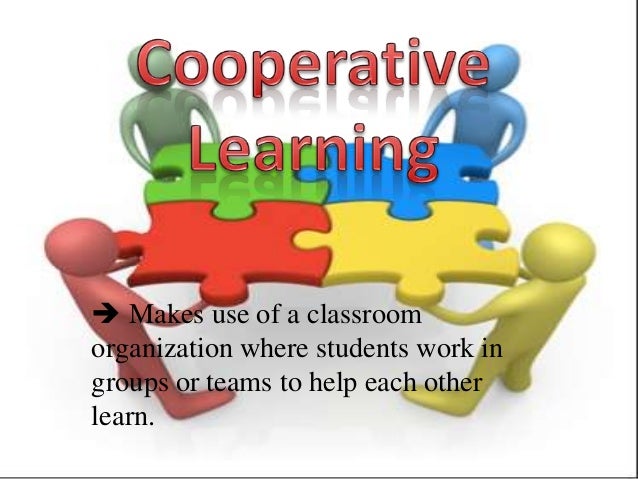
 Mr. Wong says that "cooperative learning is a win-win situation." I am going to whole heartedly agree with this statement. When a teacher is up in front of the class teaching they can not possibly know which student is understand and which is not. Being in a small group those students may feel more comfortable letting their peers know they need a bit of help understanding. Cooperative learning refers to a set of instructional techniqueswhereby students work in small, mixed-ability groups. What this may look like is:  
  • The teacher presents a lesson to the students.
  • He student groups are given activities to master the objectives.
  • The teacher teaches group and study strategies.
  • The student work together to help one another master the objectives. 
Cooperative learning also help students compete only against themselves. Our society now has normalized the idea of competing against one another. Like Mr. Wong states " your mission in life is not to get ahead of other people; your mission is to get ahead of yourself." In cooperative learning no one student is responsible for themselves but for the group as a whole. Now I see my Pre K students sit in tables and are al, assigned to a buddy. This is because the teacher wants them to talk and try to come up with a solution by themselves. This is also extremely helpful because those who struggle can be partnered with those who have mastered the concept. That way they can help one another and they build up their social skills, and conflict management skills. Although this idea does seem great there are some cons to this. For example when you ask students to break up into groups you may get some groans or questions asking how long they will be in that group. Well "Effective grouping is dependent on two major factors." 
  1. The class climate
  2. The explanation 
When students don't cooperate the ineffective teacher is at a loss so remember " It is the teacher who is responsible for the success of the classroom. " This means that students do play a huge role in the classroom but that does not mean they control the classroom. An effective teacher doesn't give vague directions knowing that will provoke comments like "Do I have to do this." A teacher must give directions that are easily comprehended if not students will start to act up. 
 I really enjoy this method because I know that making new friends is also kind of awkward and this method helps students get to know each other. It also helps them feel more confident when they are having trouble if they are asking someone they know and trust. It is also a great way to get different learning styles mixed in. Students all learn differently and being in a group with other different learners can help them learn new learning methods. You can also assign each student a diffrent job to accomplish in each group. Do make sure to explain that although someone is in charge of a specific job it doesn't mean they do all the work alone. It means they make sure it gets done right and everyone participates. Make sure that the jobs are changed every other week. Oh and also try calling the. Support groups not just groups or tables. Because that is what we want a support group where we all want the other to accomplish so much. 


Harry Wong chapter 23- test

This week we will be talking about test.
 Mr. Wong states "The  purpose of a test to assess a student performance against learning criteria NOT to provide the teacher with the basis for a grade." Test are used as a form of labeling students while assessments are used to see students success. We as a society need to change that perception. We should not have students that get nervous when they hear they have a test coming up. Students should feel confident and be ready to ace it. As an educator make sure you know what 2 things a test must have. First the teacher should use the results of each test to remediate and correct for student mastery. Secondly the student should be graded on a percentage system. This way they are competing only against themselves. Ineffective teachers use the test as a means of need for points on a curve, passage of time, or period to kill. Test should feel like a way of encouragement. I know many older teachers give test and when a student fails just has them do corrections. Except the corrections is just writing down the problem and the correct answer. Students are not learning at all when they are told to do that.  "The purpose of a test is to help the teacher assess with the student has or has not learned." This means that when a student does not succeed then teachers must help the student with whatever they are struggling with. Think of it this way if you break your leg you won't be able to ever heal if you don't take care of it. The same goes for students they will never learn a concept if you keep testing them over a subject they don't understand. Mr. Wong states that "If the student DOES NOT MASTER an objective, give the student remediation or corrective help."  Although ineffective teachers only care about getting something in the grade book. Like Mr. Wong says "  The role of the teacher is not to grade a student. The main role of the teacher is to help every student reach the highest possible level of achievement." Formative test are used to determine what remediation is needed for a student to master the content, skill, or objective. This is what effective teachers should do when a student does not succeeded. These test should be the same kind of test but the questions should be a bit different. These days it just doesn't seem that way it seems like all that matters are grades in school. I think this is why many students seem to cheat it's easier than asking for help from someone they believe won't help them. I know that there have been many times I have been afraid to ask for help because the teacher I had was strict and would answer questions before or after school. I would have to ask a friend to explain the concept to me since I didn't want to fail and get a bad grade. We need to change this way of thinking. We need to make sure that asking questions doesn't make you dumb it makes you responsible! You are taking action by stepping up and saying I don't seem to understand. Test are a way of saying this but sadly in today's world this doesn't seem like a big enough shout. The effective teacher uses a test as a way to see where their students are or where they need help.
This is a website containing 10 must know facts about test for parents.
Here are some test taking tips for all ages.
A great site to use when you need to study or are having trouble with any subject is this one.

Thursday, December 10, 2015

Harry Wongs: The role of a teacher is to uncover

                       Today we will be covering Harry Wongs unit D Lesson Mastery.
  As Mr. Wong states in this section "There is only one way for a student to learn anything. The student must put in effort; The student must work to learn." This is the most common reason why students do not complete their assignments. Students don't learn because teachers are the ones who do the hard work. Mr. Wong has made it clear from the beginning of his boom that to have a successful class we must teach procedures early on in the year. This is because this lessens the interruptions and and maximizes uninterrupted learning time. According to Wong "increase the amount of time the student is working, and you increase learning." Let's face it we only have a short limited time to teach a room full of different style learners the same lesson. We need as much time as we can get without any interruptions. A teacher who does not set up their procedures early on will be working extra hard now to try and teach students a new procedure in the middle of the year.
  Now on to the next topic, An effective teacher never asks "what am I going to cover tomorrow?" But instead should be asking "what are my students to learn, achieve, and accomplish tomorrow?" This is because as a teacher you should not be asking what you are going to do. This implies that the teacher is the one doing all the work and we do not one that! According to Wong if this happens then students will come to class wondering what the teacher is going to do next. At the beginning of a lesson make sure to let students know what they are responsible for learning. "The role of the teacher is not to cover. The role of the teacher is to UNCOVER."
  Now ineffective teachers will grab a textbook and tell the students to read a chapter and then test them over it. Although textbooks are a great tool for learning that is not the appropriate way to use them. The effective teacher stands before the class and address what the students are to accomplish. This way they can use the textbook knowing what it is they are suppose to be learning and not just diving in blindly. This is not only helpful for students but also for those parents who help students with their homework that way they also understand what it is their child is to accomplish.
  Objectives are another helpful resource not only to teachers but also to students. Wong explains that " objectives or criteria do two things : assign and assess." See when teachers use objectives it helps them teach more directly from it. And the objective helps the student by giving them directions to comprehend an assignment. An objective should consist of  a verb and a sentences explaining what is to be mastered. It should also be a precise objective not over the top complex. All that will do is end up confusing your students.
  The goal of a test is to determine wheather the students understood the concept. Wheather there should be additional study needed in the particular section. Test it's the teacher know if students are struggling to understand the lesson or if the teacher needs to change their teaching approach to one that appeals to everyone.
  Mastery is the knowledge of a skill or the accomplishment of something that was unacheiveable before. This could be like passing that spelling test that they struggled with for so long.
  Grades are important for student learning and achievement because it could help to motivate students to study hard to get a desired grade. This helps the student want to achieve goals and pay more attention in class. Grades are important because they reflect the students mastery of what they are learning.
  An objective for my Pre-K class would be something like: Write the numbers from 1-10
A test question for my class might be something like: what sound does the o in open make?
  My thoughts on testing within the classroom is that it is a good thing to do. This way you can see where your students are and if they are where they should be or if you need to work harder. Although I don't like standardize test I feel like they are a good tool to use. This helps determine wheather the curriculum should be kept the same or changed. This is all for the cause of a great education.

Wednesday, December 9, 2015

What constitutes an effective discipline plan

Reading Harry Wongs book has given me a great idea of an effective teacher. In his earlier chapter Wong states that you must establish your rules the first days of school. This way they learn it early on what is expected of them. To have an effective discipline plan you must establish your expectations whether they be written or verbal. As a teacher it is best you have your rules or expectations written and posted around the room here's why. Let's say you don't post your rules so when a student breaks a rule how will they know that they broke it? With that being said an effective discipline plan has 3 main components (Rules, Consequences, and Rewards). You must show students that you do abide by the rules so if someone breaks them then there must be a consequence. If not then students will misbehave since they see you don't enforce the rules or anything you said. The children will eventually not be afraid to break the rules as they will catch on to you not being consistent. This can also damage any trust or relationship with students as they will feel like their teacher doesn't stick to her promises. This is not what we want, we want the students to be successful and to come to you if they are struggling or need help. If students think you are not a person who sticks to what they say they may not have enough trust to tell you anything.  Now for the rewards part we don't just want to punish children we want to encourage them to be the best they can be. This is when you would reward children for excellent behavior. This also may encourage other students to abide by the rules if they know they will be rewarded. As much as this sucks it's true! Students are more likely to be involved and  do what they are suppose to if they know they will be rewarded. This all may seem like you are completely in charge and students have no say. That is not tru don't we want students to be involved a great suggestion would be to have some rules already made up and as a class you could make a set of rules.  Another important thing to remember is when making up your rules keep in mind the age and grade of your students. You can't have the same rules for kindergarten that you do for fifth graders. The biggest factor to having an effective discipline plan would be to actually use your discipline plan. Be committed don't just say you have a plan and then make up a new one as you go along. To have a successful year you must have some consistency throughout the year!

Thursday, December 3, 2015

If I were in charge of the world poem

If I were in charge of the world
There would be no crime or violence
There would be nothing but peace
No more war or higher power

If I were in charge of the world
Summers would be longer
Everyday would be a holiday
There would be no Monday's

If I were in charge of the world
Pasta would be the only food acceptable
You could have dessert for breakfast

If I were in charge of the world
School would be a fun place
There would be naps for high schoolers
Recess would continue well into college

If I were in charge of the world
Teaching would be recognized as fascinating profession
Being a teacher would be the coolest thing ever!
A teacher would be paid a lot more
Teachers would get much more respect


This is the original poem that mine is based off of

Thursday, November 19, 2015

Consequences

After reading Wongs ideas on consequences I believe that he is correct in what he is saying. I mean you can't get mad when a student doesn't know what to expect because you either don't follow your rules or you just make it up as you go along. Like Wong previously mentioned the first days of school are for teachers to go over what is expected from the students. This mean you go over the consequences of what their choices are. For example, I have a teacher who has a chart posted in their classroom with the consequences. Just yesterday we had a sub and she was being treated disrespectfully, All the kids were doing whatever they pleased. The teacher came back and you know what happened the kids that were being disrespectful yesterday were able to leave class or not do what everyone else did. The students who were quiet and being nice had to write a page long letter apologizing to the sub for the other kids behavior. While the ones who were being rude were outside the classroom laughing and the others inside complaining about not wanting to do anything. You want to know why...our teacher never explained the consequences in detail he just asked us to be respectful and do our work not copy. So know the whole class sees that he doesn't follow a set plan he just kind of wings it. I don't 100% agree with his saying of "the number one problem in the classroom isn't discipline it's the lack of procedures and routines." I do believe that discipline plays a big part in the classroom. Let's just imagine that there was no discipline in your classroom. Well if one student does something that is not ok how would they know it was wrong? I mean you can't discipline them since it's not important in your classroom. Then all the other students would also be doing things that aren't acceptable and that would be a huge mess. You must have a balance I believe of everything you know. You can't just reward good behavior and ignore bad one. You must reward good behavior and  eliminate the bad behavior. Wong does make a point of how most ineffective teachers begin the first day with trying to teach a subject. Then how the rest of the year that teacher is stuck "running after the students." This goes to show that on the first days of school you should always explain expectations and classroom procedures to get a smooth rest of the year. I really did like the way he has made it a point to  emphasize that throughout his whole book.

Thursday, November 12, 2015

Picture Book Month Activities

After reading Picture Book Month Teacher's Guide I believe that picture books are an essential part to learning. Picture books help illustrate empathy and they help experience complex issues. These stories are short and simple to help younger children grasp the concept of the book. Picture books have been thought of as books for young children. That is not the case though picture books are for all ages. For example, in my AP English class this last week we analyzed the book The Cat In The Hat. We started off with this picture book since there is so much detail that we can use as context and textual evidence. The most important part of a picture book is the tone of the author, the moral of the story, the entire book is important. Why is is that we assume that because there are pictures in the book it's automatically for younger children? Maybe if we put aside the fact that these books are colorful and playful we would see that the author has a unique writing style. Picture books can be used in any topic you want not just for English. Many children's book help to teach us of a different culture or about the world around us. So in honor of picture book month I chose the book The Diary Of A Worm by Doreen Cronin. This book is about a worm who keeps a diary describing some cool things that happens in his life. An activity I would do to go along with this book is to use a sock and fill it with some stuffing then hot glue googly eyes. Then while we read the book we can use it to narrate the story. Then once we are done reading the boom we will be making a diary of our own! We will have the students go home and with their parents make a small diary for about a week. On Friday have the students come up and present their diaries with all everyone else. Another awesome idea would be searching for worms! We use "mud" which is pudding with crushed up Oreos on top then we put some gummy worms inside our "mud". The students each get a cup filled this mud and they can search for their worms... A bonus is that you can serve this as a snack.
This blog is run by a mom who did some worm activities with her kids go check it out.
Please make sure to check out the official website for Picture Book Month.

Thursday, November 5, 2015

Discipline and classroom management

For a couple weeks now I have been reading Harry Wongs book: How To Be An Effective Teacher The First Days Of School. Before even reading this book I had a different out take on discipline and classroom management. I use to believe that classroom management was how you kept your kids on track and quiet. As for discipline I thought it was a way of fixing behavioral issues. I have come to see that this is not entirely true. I believe classroom management should be how effectively your classroom runs with or without a teacher. For discipline I think that this means establishing rules/guidelines that must be followed. If these rules are not followed then you may use discipline to help ensure these rules are followed. I remember being a young girl how the classroom management was go to class and get to work don't slack off or you will go to the principles office. Last year when I was working with the first graders their classroom management and discipline was way different. They were expected to follow the rules/guidelines but now they had little faces describing how their behavior made the teacher feel. If you had a lot of frowns at the end of the day it was taken up with the teacher and parents. The same goes for this year with my Pre-K kids. The teacher has them move a picture of themselves to a different colored face. As for discipline I think the principle doesn't really get involved unless it is a big problem or the students behavior is not improving. For example, last week some students were arguing with one another and we asked them to try and get along. When that didn't work we pulled them aside and explained the consequences of not following the rules. This of course was no help they continued. So in the end we had another teacher take them to her classroom and she disciplined them. In the future I don't know how I'm going to react to any of these things. I am so use to following my mentors rules that I don't know how I would handle these types of situations. I guess I would just try my hardest to reinforce positive behavior since children love to be recognized for great behavior.

Thursday, October 29, 2015

Teachers Reputation

In the book The First Days Of School by Harry K Wong there is a quote that I think is extremely important. "Right or wrong, accurate or not, your reputation will precede you"(Wong 101). I clearly remember being a young girl getting assigned a teacher that every parent wanted to steer clear of. She was labeled as a harsh and unrealistic teacher. My parents tried their hardest to get me out of her classroom but their efforts were for nothing. I remember not wanting to go to school on the first day. Then before I knew it I was standing before her classroom eyes all red and puffy from crying. I walked into class the first day of school to this teacher with the biggest smile on her face. My parents were at ease right away when they saw her come up to me after seeing my face. Then all the parents left and that when I saw why people were cautious of her. She started telling us that we were possibly the most troublesome students she had met. I remember for the rest of the year no one would do their work and everyone would act out. Know that I think about this experience I think this behavior might of had something to do with her expectation of us. Without even knowing us for more than a day she had made it seem like she had given up on us. Teachers reputation is an important part of who they are. Students will hear about you and have their minds made. Before even knowing you some students have already determined if they are going to be successful this year or not. Teachers can protect their reputations by being an effective teacher. Doing the best you can and being a great teacher is a great way to insure your reputation.