Thursday, January 21, 2016

The Essential 55

Today we will be discussing rules 11-21 from The Essential 55 by Ron Clark.
  Out of thes rules my favorite would have to be number eleven: Suprise others by performing random acts of kindness. Go out of your way to do something surprisingly kind and generous for someone at least once a month. It's nice that Mr. Clark wants his students to get in the habit of doing things without expecting something in return. Like  Mr. Clark says " I feel, however, that the best time to give someone a nice suprise is when it isn't expected. That way, the person knows you didn't do it because of obligation, you did it because you wanted to."(Page 29) Doing something nice for someone is a great way to make them happy. You know what I don't like about doing random acts of kindness in the society. It's the fact that everyone must brag about how they are doing something nice hoping to gain popularity from it. If you are doing something nice why must the whole world now about this? It seems to me like you are doing it for your benefit of gaining the attention of the media.
  Another rule I found important would be number sixteen: Homework will be turned in each day for each subject by every student with no exception. Why is this so important you may be asking yourself? Well I'll tell you why you see we are all so use to making up excuses for why we didn't do something. It's almost becoming a habit of not turning in something but coming up with a great excuse. I like how Mr. Clark says " I want them to learn to be on time and proficient at a young age."(Page 56) Like I have mentioned before all these rules Mr. Clark has instilled in his students are useful not just for school but for their futures. I also think it's great how he's rewarding the students for getting their work in on time and motivating them to continue to do so.
  Rule number 18: You will make every effort to be as organized as possible. This rule seems like it would be hard for me personally. I try to be organized but when I'm in a rush there is just no way for me to take the time to place things in the correct order. Although Mr. Clark would take dramatic measures to insure students would be orgainized he explained to them why he does it. He tells them " It is not done in anger or to humiliate in any way; it is done to to teach."(Page 63)  At the end of this rule Mr. Clark states " It is always best to be specific about your expectations."(Page 66) What I find intriguing about this is that many of these books for teachers make it a point to stress this. For example, Mr. Wong also makes it known that this is very important to make sure your students know your expectations. In this book Mr. Clark has many rules and they are all very specific in how he expects them to be accomplished and I find it interesting.
  An important rule that would follow would be number nineteen: When I assign homework, there is to be no moaning or complaining. This will result in a doubled assignment. As Mr. Clark states many teachers tell him that they don't like this rule. They say homework should never be used as punishment. But he does say that it's better to have them understand that their will be consequences for their actions. If not he says they will always moan and complain about getting homework which is not acceptable. Mr. Clark says " I try to instill a positive type of attitude in my classroom, and under no circumstances do I allow my students to whine or fuss about any assignments or expectations of them."( Page 68) Again he is letting them know what is clearly expected of them. That being said he isn't completely unwilling to compromise with the students. He tells his students " If they do feel the homework too much for one night, they are welcome to voice their concerns."(Page 68) This way he is willing to work with them if they are busy and don't feel like that amount of homework will be completed.
  Finally my other important rule would be number twenty: While you are with a substitute teacher, you will obey the same rules that you follow when I am with you. (I know his is hard, but it is important.)  This rule is for students to learn that even though no one is watching them they must take pride in there appearance. This means they must not act silly or disrespectfully when their teacher is absent. This not only reflects badly on the students but also on the teacher who has taken time to get the students to follow certain protocols. Then they just decide that the protocols are not worth using while the teacher is out and toss out their manners as well? No that is not what is expected of this. As Mr. Clark has explained " I want my students to have the mind-set that they are working for themselves and to have pride in their work, wheather a boss is standing right over them or not." (Page 69)
 

On this website are 85 ideas for random acts of kindness. What do you say we try some out?


The Essential 55

We will be discussing Ron Clarks "The Essential 55" rules 1-10.
   I would like to start off by saying that I did think that 55 rules was a lot for kids to remember. After reading the rules however I realized these rules are more manners than anything something kids should already be familiar with. Many children today are taught manners but are not taught to make a habit of using them. I love how Mr. Clark makes students use their manners and let's them know why they must use them.
  I want to start off with my favorite rule out of the 10. It is rule number one: When responding to any adult, you must answer by saying "Yes ma'am" or "No sir." Just nodding your head or saying any other form of yes or no is not acceptable. Mr. Clark starts his rules with this one because he says " It sets the tone for the type of respect I expect from my students."(page 1) This rule is a great one to learn at a young age since it is a very useful tool when interacting with other adults.
  My next favorite would have to be number two: Make eye contact. When someone is speaking, keep your eyes on him or her at all times. If someone makes a comment, turn and face that person. See when someone is speaking it is a sign of respect to turn around and make eye contact. This shows that you are intreasted in what they have to say. As Mr. Clark also says "People will be more likely to trust you and believe in your ideas if they see that you are confident, sure of yourself, and making contact with them."(page 3) I believe this to be true since they do say that the eyes are the windows to your soul. I also really love how Mr. Clark urges his students to give respect to everyone not just teachers. "Often custodians, cafeteria workers, secretaries, and teachers' aides aren't considered worthy of the respect teachers get, and I work hard to change that image in the minds of my students.(page 5)
  An important rule that I think should be implemented in every classroom should be rule number eight: Do not smack your lips, tsk, roll your eyes, or show disrespect with gestures. I feel like many people do this and aren't really aware that they are doing it. Nonetheless this is still very disrespectful and makes it seem like you have no respect for the person talking or whatever someone just said to you. Mr. Clark lets his students know how disrespectful these actions are by saying "I talk to the students about how it is form of disrespect, and that sometimes you don't have to say a single word in order to get yourself in a lot of trouble."(Page 22) I think that Mr. Clark is fantastic in his way of teaching I mean after he implements a rule he has them role play someone breaking the rule. Then he shows the students the disciplinary measures that will be taken for breaking the rule. Then when the time comes and someone truly does break the rule they can't complain since they knew what was expected of them.
  Another important rule I think would be rule number nine: Always say thank you when I give you something. If you do not say it within three seconds after receiving the item, I will take it back. There is no excuse for not showing appreciation. This rule is really tough for kids today since they aren't use to appreciating the things they have. Mr. Clark had to establish this rule and remain consistent with it although it was tough at times. He has a point though there is no excuse for not showing appreciation.   Like Mr. Clark said he use to have a custodian who would occasionally mop and clean their rooms during the night shift. He made it a habit to thank him several times for all his good work. Mr. Clark says "He would seem surprised that I was thanking him for just doing his job."(Page 26) In today's society we are so use to not appreciating the things around us and it shouldn't be like that.
  I like how Mr. Clark hold these children to such standards. This teaches the children at a young age to become accustomed to being respectful and appreciative of everything and everyone around them. If you haven't yet I do recommend you read The Essential 55 by Ron Clark.

Thursday, January 7, 2016

Are schools built for learning?

 After watching Mr. Richardson's Ted talk video It got me thinking about our current educational system. Mr. Richardson motivates all of us watching to think about this question "Are schools built for learning?" I keep asking myself this question and have only come up with a very firm answer of no.
 You see when people are asked what an ideal learning environment would be they seem to come up with the complete opposite of how our learning environment is. It's sad that like Mr. Richardson said many students are learning more out of school then they are inside schools. The problem is that we aren't teaching students what they are passionate about but, instead we teach them what the state gives us. We must be honest most of the stuff these students are expected to know they will never use outside of school. We have children dropping out of school because they just can't find the motivation to stay. Instead they seem to be stressed out and losing all passion of wanting to learn.
 An ideal learning environment in my opinion would be one where we get to know what interest our students. We get to know what drives their passion for learning. Then we base our curriculum around their passions and incorporate everyone's interest into our learning. This could be used in the future as a way to get students engaging more. It also helps motivate our students to want to better their education without having to force them into it. This is also a great way to help those students that don't really have a passion. By teaching them based off what all the others are motivated it could help them find a passion. We also must figure out what motivates our students to better their education and make sure we keep that motivation alive. Getting an education should be something many people should be passionate about but sadly this isn't the case. We have hours of learning going on inside classroom and then we send students home to learn more on their own time. But if students are interested in learning inside the classroom what makes us so sure they will be willing to learn on their free time. What I'm saying is that we should find a way to motivate our students to get them passionate about learning.
 With that being said I do believe schools should be 7 hours long. If students are really passionate about their learning there will be no distractions or unnecessary interruptions. This means that students can learn a lot in a couple of hours. This way they can have more time to learn about the world around them or further learn about their passions.
 A way to measure students understanding or performance of a subject you could use a assessment of a test. But I feel like you could measure this by having them write about it. This way they get to have freedom to write about what they got out of the lesson. I believe that to we need to get students to want to learn on their own free will by motivating them.

Thursday, December 17, 2015

Harry Wong chapter 23- achieving happiness and success

Today we will be talking about a successful and happy teacher.
 Mr. Wong starts off this section by stating "  The two things that matter the most to a worker our time and money." Being a worker is not what you should aim for. A worker will agree to put in more hours if there's additional pay or some form of perk. If you are an educator you should not have to be bribed to put in more hours. As a matter of fact educators never truly stop working. A successful teacher is not a worker but a leader. Leaders look for enchantement without expecting a perk. "Life rewards the competent, not the clock watchers." If you are busy being a leader you will be rewarded because you are strengthening your skills making you a valuable assets. Now on to the classroom environment. A successful teacher understands that the classroom is a complex environment. Yet they are capable of making decisons and solving problems despite that. Mr. Wong seems to believe that "A person's behavior will determine what choices that person will make." I am going to go ahead and say that I totally agree. If being an educator you believe it is a miserable job then you will make poor decisions for your JOB. If you have a positive attitude about being an educator then you will make good dese ions to help you better yourself. To be a leader you must follow these simple rules.

  • "Leaders CHOOSE!"
  • "Leaders have control over their own lives."
  • "Leaders are people who strive, reach for excellence, and seek achievement."
Leaders chose to become better at what they do. They chose to be successful teachers. Leaders don't decide they take action! Leaders also take control of their lives. They make sure to generate your own happiness. So much of that happiness comes from sharing with others. Leaders don't give up until they have what they want. If you haven't yet noticed a leaders behavior is also a big part of their success. They are always wanting to be involved in their profession and wanting to share their happiness with everyone around them. In this chapter Mr. Wong gives us a group of different people that either succeed or don't. I have read through and I believe that I am a maintenance person. Those types of people are the ones who are characterized as being tired most of the time.  They also hope to and the make it through the week always seeking sympathy. Next  we have protective people. They can usually be found sitting in the back of the role in meetings and complaining about everything they do. Sadly protective and maintenance people make up 80% of the teaching profession. We need teachers who are glad to be doing what they love and who are happy to help. Today when we give something we expect something in return. This should not be how we function but sadly that is how life works today. "This is teaching: Promoting student growth." A professional teacher seeks that the students perform above expectations. They want to see students learning everything they need to and much more.
I feel like in the future I would work hard to be a leader. I also feel like my profession will get into my personal life a lot and I am totally ok with that. I will always be striving to find the best way to make sure my kids learn. I want to be able to help all those kids who are struggling go above and beyond. My only goal in life is to be happy and although at first I didn't seem to know how to accomplish this I seem to have found my answer. Last weekend I volunteer to help raise money for charity since it's the holiday. Once I was done I realized it felt good to help those around me and share some of my happiness with them. I want to be able to help the who.e world but unfortunately that is impossible so I will settle for the next best thing. I will strive to help all those children who are struggling and need as much help as possible. I will spend as much time as I can helping and looking up ways to make learning fun and exciting. I will make sure that my students are excited for test to show off all the knowledge they have. I will keep in mind all that Mr. Wong has taught me through this book. If you are an educator I highly recommend you read this book it is seriously the best thing ever. Unfortunately I could not find the whole entire book but I was able to find this slide show summarizing the main parts of the book.
Here are some letters student wrote their teachers as a thank you for all they have done.
Please watch this heartfelt video of a teacher who believed in one student and changed his life.


Harry Wongs chapter 23- cooperative learning

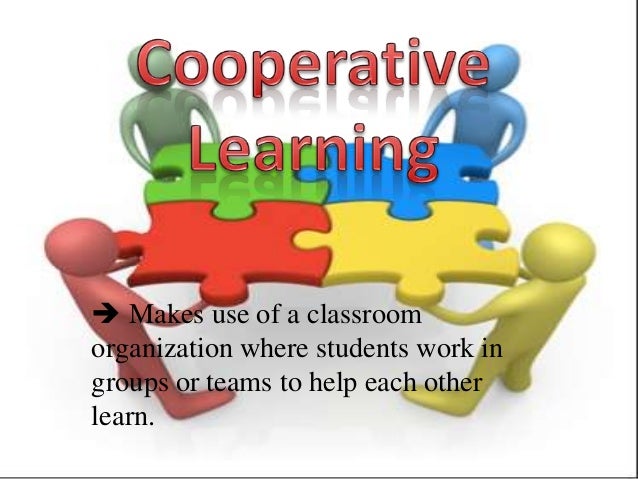
We will be discussing cooperative learning and how it helps. 
 Mr. Wong says that "cooperative learning is a win-win situation." I am going to whole heartedly agree with this statement. When a teacher is up in front of the class teaching they can not possibly know which student is understand and which is not. Being in a small group those students may feel more comfortable letting their peers know they need a bit of help understanding. Cooperative learning refers to a set of instructional techniqueswhereby students work in small, mixed-ability groups. What this may look like is:  
  • The teacher presents a lesson to the students.
  • He student groups are given activities to master the objectives.
  • The teacher teaches group and study strategies.
  • The student work together to help one another master the objectives. 
Cooperative learning also help students compete only against themselves. Our society now has normalized the idea of competing against one another. Like Mr. Wong states " your mission in life is not to get ahead of other people; your mission is to get ahead of yourself." In cooperative learning no one student is responsible for themselves but for the group as a whole. Now I see my Pre K students sit in tables and are al, assigned to a buddy. This is because the teacher wants them to talk and try to come up with a solution by themselves. This is also extremely helpful because those who struggle can be partnered with those who have mastered the concept. That way they can help one another and they build up their social skills, and conflict management skills. Although this idea does seem great there are some cons to this. For example when you ask students to break up into groups you may get some groans or questions asking how long they will be in that group. Well "Effective grouping is dependent on two major factors." 
  1. The class climate
  2. The explanation 
When students don't cooperate the ineffective teacher is at a loss so remember " It is the teacher who is responsible for the success of the classroom. " This means that students do play a huge role in the classroom but that does not mean they control the classroom. An effective teacher doesn't give vague directions knowing that will provoke comments like "Do I have to do this." A teacher must give directions that are easily comprehended if not students will start to act up. 
 I really enjoy this method because I know that making new friends is also kind of awkward and this method helps students get to know each other. It also helps them feel more confident when they are having trouble if they are asking someone they know and trust. It is also a great way to get different learning styles mixed in. Students all learn differently and being in a group with other different learners can help them learn new learning methods. You can also assign each student a diffrent job to accomplish in each group. Do make sure to explain that although someone is in charge of a specific job it doesn't mean they do all the work alone. It means they make sure it gets done right and everyone participates. Make sure that the jobs are changed every other week. Oh and also try calling the. Support groups not just groups or tables. Because that is what we want a support group where we all want the other to accomplish so much. 


Harry Wong chapter 23- test

This week we will be talking about test.
 Mr. Wong states "The  purpose of a test to assess a student performance against learning criteria NOT to provide the teacher with the basis for a grade." Test are used as a form of labeling students while assessments are used to see students success. We as a society need to change that perception. We should not have students that get nervous when they hear they have a test coming up. Students should feel confident and be ready to ace it. As an educator make sure you know what 2 things a test must have. First the teacher should use the results of each test to remediate and correct for student mastery. Secondly the student should be graded on a percentage system. This way they are competing only against themselves. Ineffective teachers use the test as a means of need for points on a curve, passage of time, or period to kill. Test should feel like a way of encouragement. I know many older teachers give test and when a student fails just has them do corrections. Except the corrections is just writing down the problem and the correct answer. Students are not learning at all when they are told to do that.  "The purpose of a test is to help the teacher assess with the student has or has not learned." This means that when a student does not succeed then teachers must help the student with whatever they are struggling with. Think of it this way if you break your leg you won't be able to ever heal if you don't take care of it. The same goes for students they will never learn a concept if you keep testing them over a subject they don't understand. Mr. Wong states that "If the student DOES NOT MASTER an objective, give the student remediation or corrective help."  Although ineffective teachers only care about getting something in the grade book. Like Mr. Wong says "  The role of the teacher is not to grade a student. The main role of the teacher is to help every student reach the highest possible level of achievement." Formative test are used to determine what remediation is needed for a student to master the content, skill, or objective. This is what effective teachers should do when a student does not succeeded. These test should be the same kind of test but the questions should be a bit different. These days it just doesn't seem that way it seems like all that matters are grades in school. I think this is why many students seem to cheat it's easier than asking for help from someone they believe won't help them. I know that there have been many times I have been afraid to ask for help because the teacher I had was strict and would answer questions before or after school. I would have to ask a friend to explain the concept to me since I didn't want to fail and get a bad grade. We need to change this way of thinking. We need to make sure that asking questions doesn't make you dumb it makes you responsible! You are taking action by stepping up and saying I don't seem to understand. Test are a way of saying this but sadly in today's world this doesn't seem like a big enough shout. The effective teacher uses a test as a way to see where their students are or where they need help.
This is a website containing 10 must know facts about test for parents.
Here are some test taking tips for all ages.
A great site to use when you need to study or are having trouble with any subject is this one.

Thursday, December 10, 2015

Harry Wongs: The role of a teacher is to uncover

                       Today we will be covering Harry Wongs unit D Lesson Mastery.
  As Mr. Wong states in this section "There is only one way for a student to learn anything. The student must put in effort; The student must work to learn." This is the most common reason why students do not complete their assignments. Students don't learn because teachers are the ones who do the hard work. Mr. Wong has made it clear from the beginning of his boom that to have a successful class we must teach procedures early on in the year. This is because this lessens the interruptions and and maximizes uninterrupted learning time. According to Wong "increase the amount of time the student is working, and you increase learning." Let's face it we only have a short limited time to teach a room full of different style learners the same lesson. We need as much time as we can get without any interruptions. A teacher who does not set up their procedures early on will be working extra hard now to try and teach students a new procedure in the middle of the year.
  Now on to the next topic, An effective teacher never asks "what am I going to cover tomorrow?" But instead should be asking "what are my students to learn, achieve, and accomplish tomorrow?" This is because as a teacher you should not be asking what you are going to do. This implies that the teacher is the one doing all the work and we do not one that! According to Wong if this happens then students will come to class wondering what the teacher is going to do next. At the beginning of a lesson make sure to let students know what they are responsible for learning. "The role of the teacher is not to cover. The role of the teacher is to UNCOVER."
  Now ineffective teachers will grab a textbook and tell the students to read a chapter and then test them over it. Although textbooks are a great tool for learning that is not the appropriate way to use them. The effective teacher stands before the class and address what the students are to accomplish. This way they can use the textbook knowing what it is they are suppose to be learning and not just diving in blindly. This is not only helpful for students but also for those parents who help students with their homework that way they also understand what it is their child is to accomplish.
  Objectives are another helpful resource not only to teachers but also to students. Wong explains that " objectives or criteria do two things : assign and assess." See when teachers use objectives it helps them teach more directly from it. And the objective helps the student by giving them directions to comprehend an assignment. An objective should consist of  a verb and a sentences explaining what is to be mastered. It should also be a precise objective not over the top complex. All that will do is end up confusing your students.
  The goal of a test is to determine wheather the students understood the concept. Wheather there should be additional study needed in the particular section. Test it's the teacher know if students are struggling to understand the lesson or if the teacher needs to change their teaching approach to one that appeals to everyone.
  Mastery is the knowledge of a skill or the accomplishment of something that was unacheiveable before. This could be like passing that spelling test that they struggled with for so long.
  Grades are important for student learning and achievement because it could help to motivate students to study hard to get a desired grade. This helps the student want to achieve goals and pay more attention in class. Grades are important because they reflect the students mastery of what they are learning.
  An objective for my Pre-K class would be something like: Write the numbers from 1-10
A test question for my class might be something like: what sound does the o in open make?
  My thoughts on testing within the classroom is that it is a good thing to do. This way you can see where your students are and if they are where they should be or if you need to work harder. Although I don't like standardize test I feel like they are a good tool to use. This helps determine wheather the curriculum should be kept the same or changed. This is all for the cause of a great education.